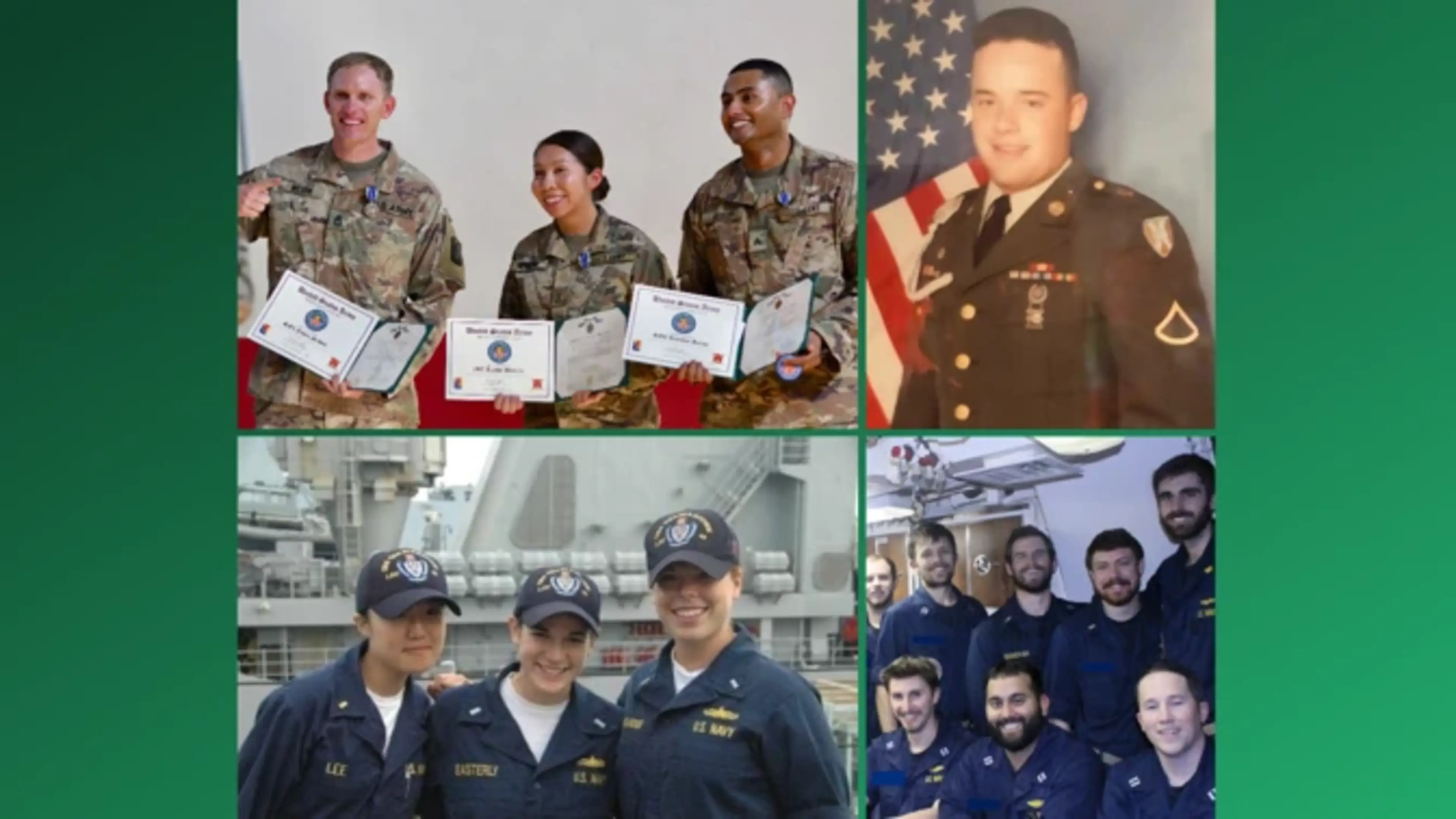
“When I was driving a warship in the Navy, I had to stay flexible and roll with the punches—we could never know exactly what was going to happen,” says Anie Lee. “As a member of Chime’s Security Operations team, I bring a similar mindset to my work. We navigate solving problems together, anticipate what might happen, and respond to incidents—it’s not unlike my time in the service.”
Will Wix, now Chime’s Senior Manager of Product Operations, was put in charge of a group of young military recruits as an officer in the Navy. He remembers helping them navigate car loans and other forms of debt: “The car dealerships outside our naval base were notorious for taking advantage of young sailors with adversarial financing offers,” he says. “Fortunately, the Navy was proactive in looking after them and helping them understand the pitfalls of predatory lending. That experience came to mind when I joined Chime—I’m proud to work for a company that goes out of its way to help people’s financial well-being in the same way the Navy does.”
As Chimers like Anie and Will demonstrate, military service shapes not just who you are—but how you work. Veterans at Chime bring leadership, empathy, and a deep sense of mission to their teams. Whether it’s managing security operations, building social impact partnerships, overseeing physical office security, or mentoring others through the transition, their stories show how military experience maps meaningfully to careers in tech.
We’re proud to have veterans on our team at Chime, both for their service to our country and the value they bring to our organization. Here’s a look at some of their stories, skills, and tips for veterans navigating the move into the tech world.
The role of service: What it means to be a veteran
It’s no secret that joining the military is a huge life decision. Everyone who joins has a different reason for doing so, yet everyone works toward a shared goal: to protect the country they’re serving.
For Anie, the choice to serve was borne of a desire to give back to her country and take some time to decide what she wanted to be when she grew up. “I was pre-med but had a lot of doubts about being a doctor, so joining the Navy gave me a chance to try something else out and start my career,” she says. “I feel blessed to have had the opportunity to serve my country and learn everything I did along the way.”
The transition from service to tech
Military service instills a mindset—one grounded in discipline, adaptability, and purpose. For veterans entering the tech world, those values don’t just carry over, they become essential.
Jonathan Kurup, a U.S. Army veteran who served for seven years, says learning to work across lines of difference—across beliefs, backgrounds, and perspectives—has been foundational in his work on Chime’s Social Impact and Partnerships team. “There’s so much from the military that’s transferable,” he says. “In partnerships, empathy and collaboration are key—and I learned that in the Army.”
Discipline, he adds, is what keeps him moving forward, even when the work is tough or the path isn’t clear. “It’s not about being told what to do—it’s about showing up and doing what needs to be done, even when it’s uncomfortable,” he says. “That mindset of embracing the hard stuff is what helps me lead with purpose at Chime.”
Chad Bosques, who joined the Army at 17 and later served in Desert Shield and Desert Storm before spending 14 years in law enforcement, echoes that sentiment.
“One of the most valuable lessons I carry from my military service is the importance of discipline and adaptability,” Chad says. “In the military, I learned to stay focused under pressure and to adapt quickly to changing situations.”
Now part of Chime’s Physical Security team—which oversees everything from office access to emergency response, travel safety, and executive protection—Chad applies that same mindset to a fast-paced fintech environment. “Those qualities help me stay organized, meet deadlines, and navigate complexity with resilience and flexibility.”
While every transition looks different, veterans like Jonathan and Chad show how the tools forged in service—structure, focus, and the ability to adapt—can become assets in new and meaningful ways.
For Anie, the transition to civilian life was supported by her pursuit of a master’s in cybersecurity. “I was able to make connections through my program, but there were still skills I didn’t know how to frame in corporate terms—like firefighting. My ability to advance came down to the people who supported and pushed me along the way.”
Her advice? “Focus on what you’re interested in. Tech doors are more open than they used to be. Find something that brings out your strengths and passions.”
Supporting veterans through mentorship
At Chime, we believe veterans bring an invaluable perspective shaped by leadership, maturity, and mission-driven problem-solving. But we also recognize that transitioning out of the military isn’t just about a new job, it’s about building a new life.
That’s why Chime is proud to partner with American Corporate Partners (ACP), a nonprofit dedicated to helping veterans and military spouses find their next career path. Through one-on-one mentorship, Chime employees provide personalized guidance to help veterans make a successful transition into civilian careers.
Sam Donovan, Chime’s Staff Security Manager and an ACP mentor, knows how meaningful this kind of support can be. “During my transition from the submarine force, I found mentors who helped me translate my experience and find meaningful opportunities. That’s what I try to offer now—connection, encouragement, and perspective.”
This year, Chime deepened its partnership with ACP, thanks in part to Jonathan Kurup’s leadership. Eight Chimers are now actively engaged in mentorships—with long-term commitments designed to help veterans and their families navigate the “gray area” between service and career.
“For me, the transition was tough,” Jonathan shares. “I joined the military later in life, after already working. Coming back from deployment, it was hard to adjust—not just practically, but emotionally. Isolation, disassociation—it’s something we don’t talk about enough. Mentorship helps people know they’re not alone.”
Chad Bosques agrees—and has taken on that mentor role himself: “A good mentor can change everything,” he says. “That’s why I always make time for veterans who reach out—whether it’s help with a resume or just a conversation about what’s next. Someone did that for me, and now I want to do the same for others.”
Choosing Chime—and bringing skills to the table
For Anie, military service taught her the value of teamwork. “On deployments, you live together for six to eight months. You learn to lead, listen, and adapt—fast. That shaped how I show up at Chime: always looking for ways to support the team and build something better together.”
Will Wix says the key to a meaningful career post-service is mission alignment. “The military’s mission is to protect your country. If you’re mission-driven, look for companies that give you that same sense of purpose. That alignment can give you structure and motivation.”
Chad puts it simply: “Chime’s mission is to help people feel secure—financially and physically. That’s what I’ve always done. It’s a direct line from my service to the work I do now.”
Veterans helping veterans—at Chime and beyond
Whether it’s through mentorship, hiring, or community building, Chime’s veterans are shaping what service looks like in tech, and showing others how to do the same.
Chad’s advice to veterans considering tech? “Leverage your leadership, focus, and problem-solving skills, because they are hugely valuable in this industry. Be open to learning. And don’t hesitate to reach out—to veteran networks, to Chime, to people who’ve been there.”
Because for Anie, Will, Sam, Jonathan, and Chad, it’s not just about where they’ve been. It’s about where they’re helping others go.
Veteran resources
For more support as a veteran leaving the service, here are some resources our Chime veterans recommend:
American Corporate Partners (ACP): Free one-on-one mentoring for post-9/11 veterans, active duty spouses, and eligible military spouses with corporate professionals across industries.
FourBlock Career Readiness Programs: Partners with Columbia University and employers to deliver career transition programs focused on networking, resume writing, interviewing, and more.
Vets in Tech: Supports veteran transitions into tech careers through education, job fairs, and LinkedIn/resume support.