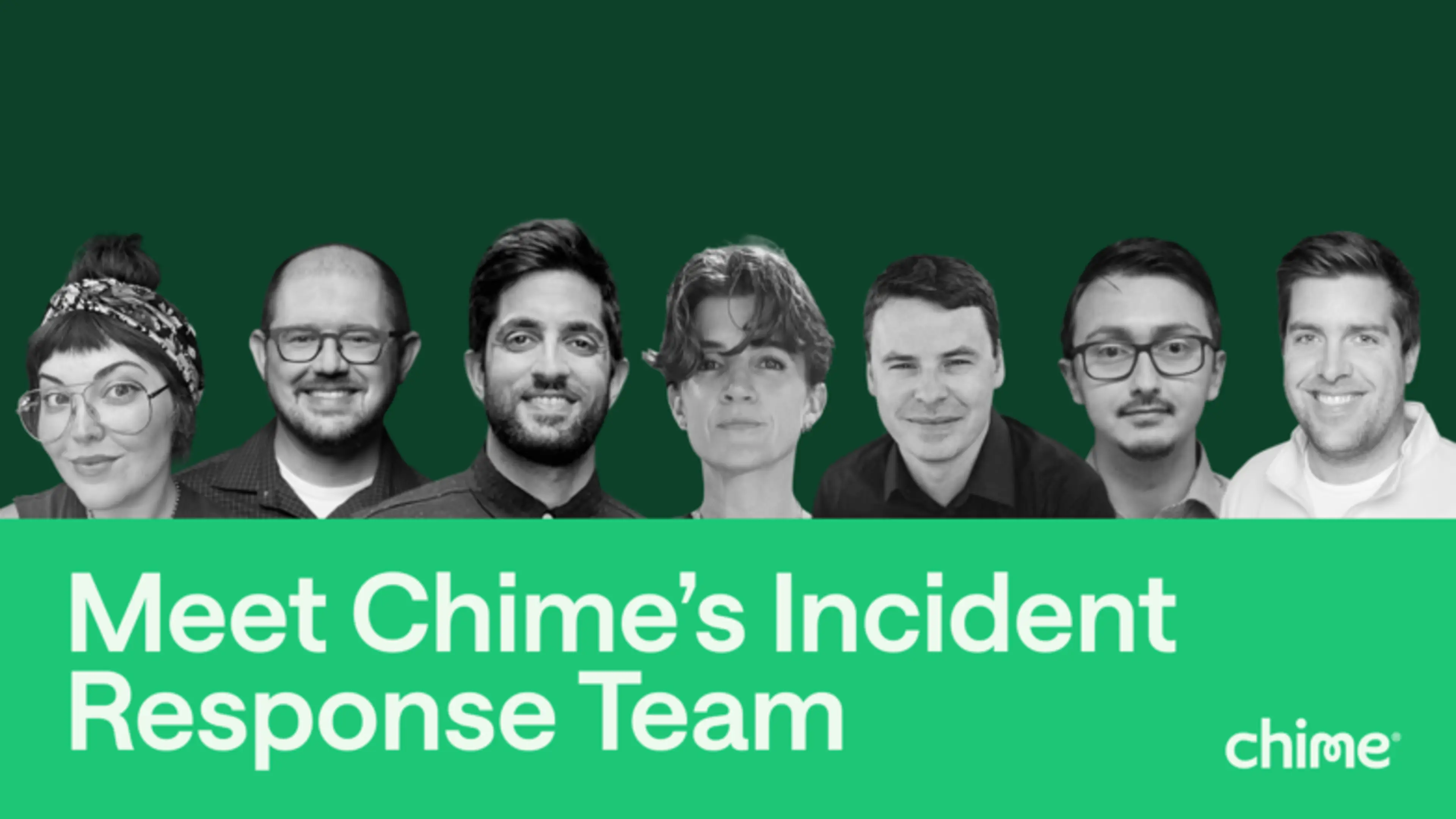
Meet Chime’s Incident Response Team

September 16, 2025

Tags:

Engineering at Chime

[CC] Meet Chime’s Incident Response Team - Content, Part 1, Image 1

How a dedicated and experienced crew keeps calm, carries on, and keeps Chime running—one incident at a time.

At Chime, helping our members Unlock Financial Progress™ isn’t just a mission—it’s a commitment that runs through everything we do. So when something breaks, slows down, or doesn’t behave as expected, the stakes are high.

That’s where Chime’s Incident Response Team steps in.

They’re the calm in the chaos: coordinating efforts across engineering, security, support, comms, and beyond to resolve disruptions quickly—and thoughtfully. But their work isn’t just about fixing what’s broken. It’s about learning, improving, and caring for the people on both ends of the system.

“Incidents can feel like emergencies to others, but to us, they’re our bread and butter,” says J. Paul, one of the team’s responders.

In this post, you’ll meet the humans behind the pagers, learn what defines an “incident” at Chime, why the team takes a blame aware, curiosity-driven approach, and how they’ve built a culture that’s as much about empathy as it is about uptime.

First things first: What is an incident?

At Chime, an “incident” is any unplanned disruption, degradation, or external event
which poses impact or risk to the Chime member experience, our technical systems, or business AND which requires an urgent, focused, cross-functional, coordinated effort to address effectively.

Incidents are tracked, triaged, and managed by Chime’s Incident Response Team. But behind the alerts and dashboards are people: the cross-functional responders from engineering, security, member experience, comms, and more. At the heart of that response is this team—acting as conductors, counselors, and connectors all at once.

Meet the team

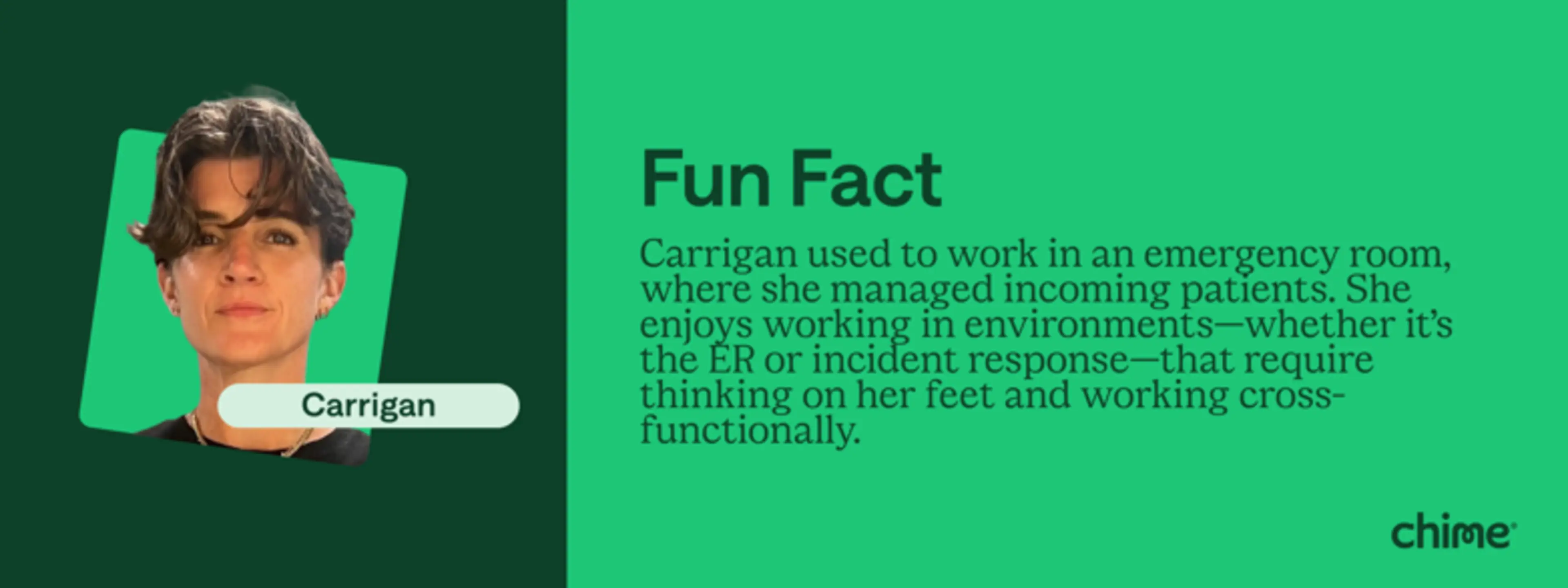
Carrigan
[CC] Meet Chime’s Incident Response Team - Content, Part 1, Image 2

Before joining Chime, Carrigan worked in the ER, and it shows: Quick decision-making, unpredictability, and managing complexity under pressure are her comfort zone. “I’ve always struggled with roles that feel monotonous,” she says. “This job is the opposite—every incident is different, and that’s what keeps it exciting.”

Carrigan also emphasizes psychological safety during high-stress moments: “Incidents can feel scary for people not on our team, so we work hard to create a safe space with no blame or shame. The reality is, things break. We’re here to help fix them and reflect on what went wrong. That’s our job.”

When people feel that they are trusted and supported with respect and open communication, they’re positioned to do their best work, even during incidents.

Part of the team’s job isn't just to lead in responding to incidents, it's doing so while establishing a culture in alignment with our values and supporting all responders.
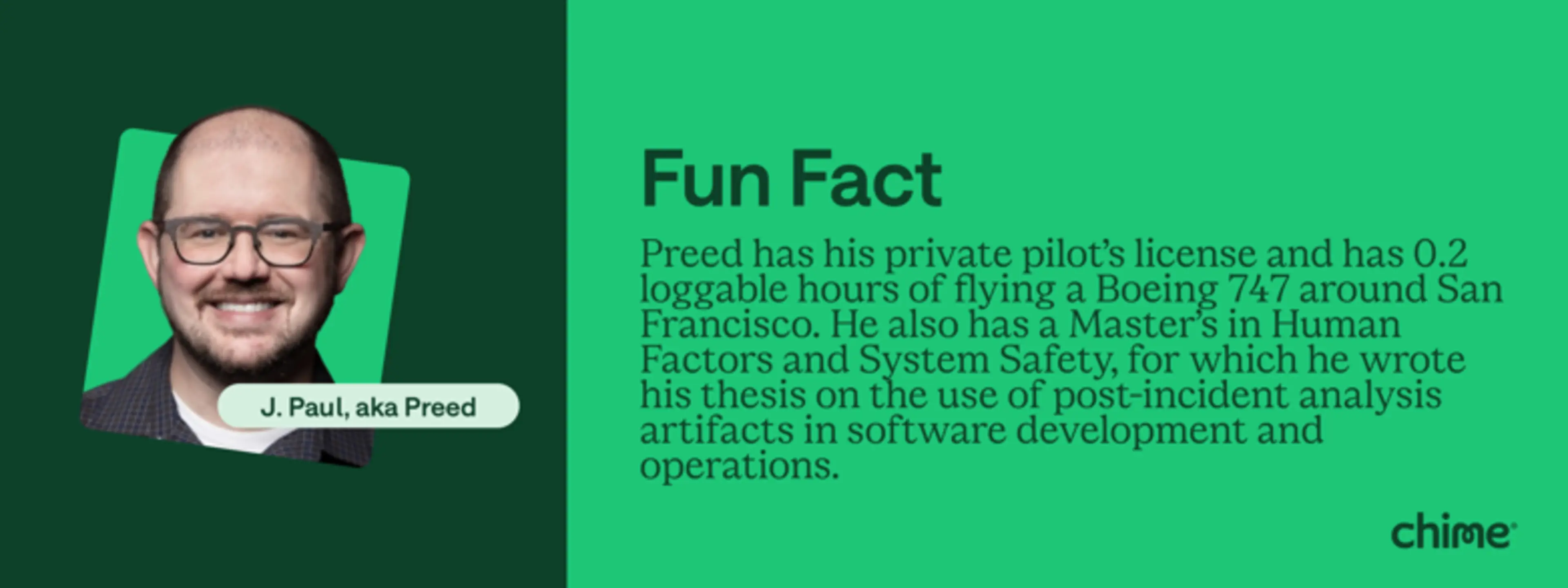
J. Paul (aka Preed or JP)

[CC] Meet Chime’s Incident Response Team - Content, Part 2, Image 1

With a background in human factors and systems safety, Preed brings a unique lens to incident response. “The most interesting thing isn’t always how the technical system broke,” he explains. “It’s how people interacted with it before, during, and after an incident.”

He’s particularly passionate about what happens after the alarms stop: learning from incidents. Whether it’s a big incident or a tiny one no one will remember a week from now, Preed digs into every case to uncover how Chime really works behind the scenes—and how we can do better. “Incidents show us what we thought would happen versus what actually did. That gap is where growth lives.”

Incidents teach us. They’re opportunities to understand how our sociotechnical systems really function.


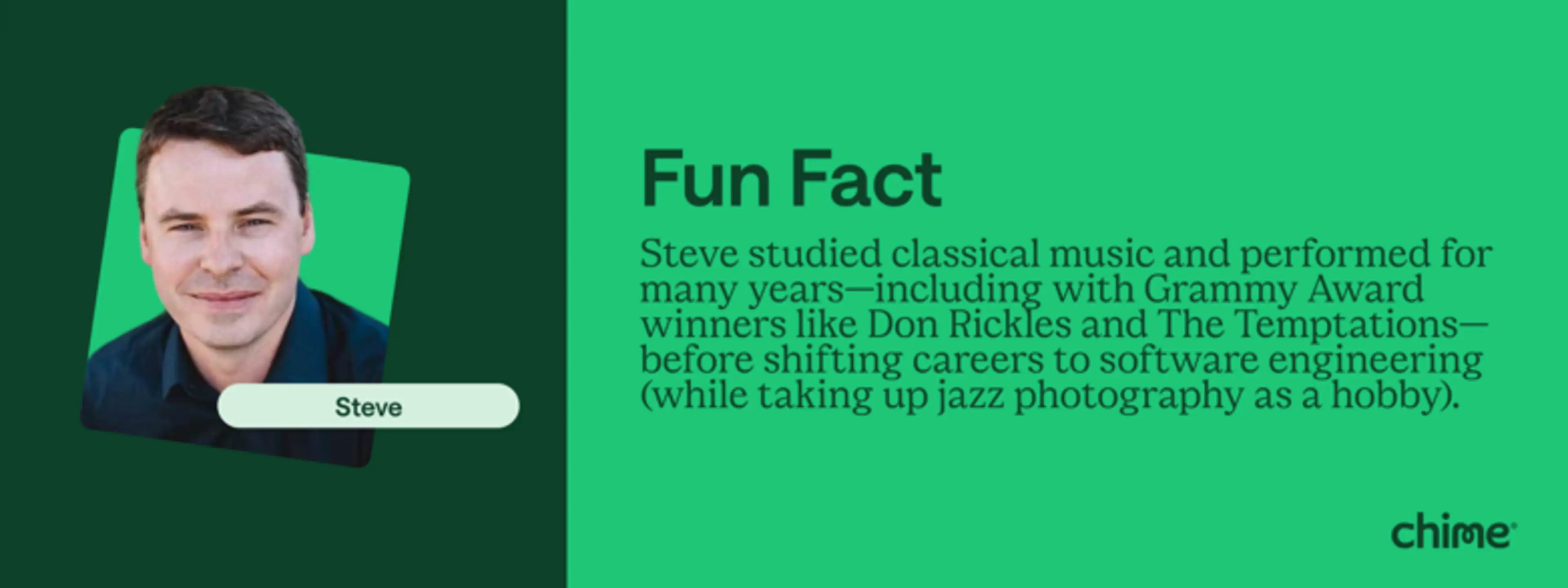
Steve

[CC] Meet Chime’s Incident Response Team - Content, Part 2, Image 2

For Steve, incident response isn’t just a job—it’s a calling. “We love this,” he says. “No one’s forced to be here. We choose this work.” While most product teams plan their roadmaps months in advance, Steve is energized by the unpredictability of his work: priorities that change by the hour, the unexpected challenges, and the deep sense of purpose that comes with supporting others in tough moments.

As the founding member of Incident Response at Chime, Steve is proudest of the culture the team has created: they’re not only technically fluent, but also emotionally attuned and cross-functionally connected. “There are different ways to do this work, but what we’ve built is something truly collaborative, and I think that makes us more responsive, resilient, and, ultimately, effective,” he says. “We listen, we lead with empathy, and we partner with each other and across the organization to better understand and resolve incidents when they arise.”

And that, he says, is the heart of incident response: not just being ready to act, but being ready to care.

True incident response isn’t just about fixing systems—it’s about building a team that’s always ready to show up, support, and lead with care.


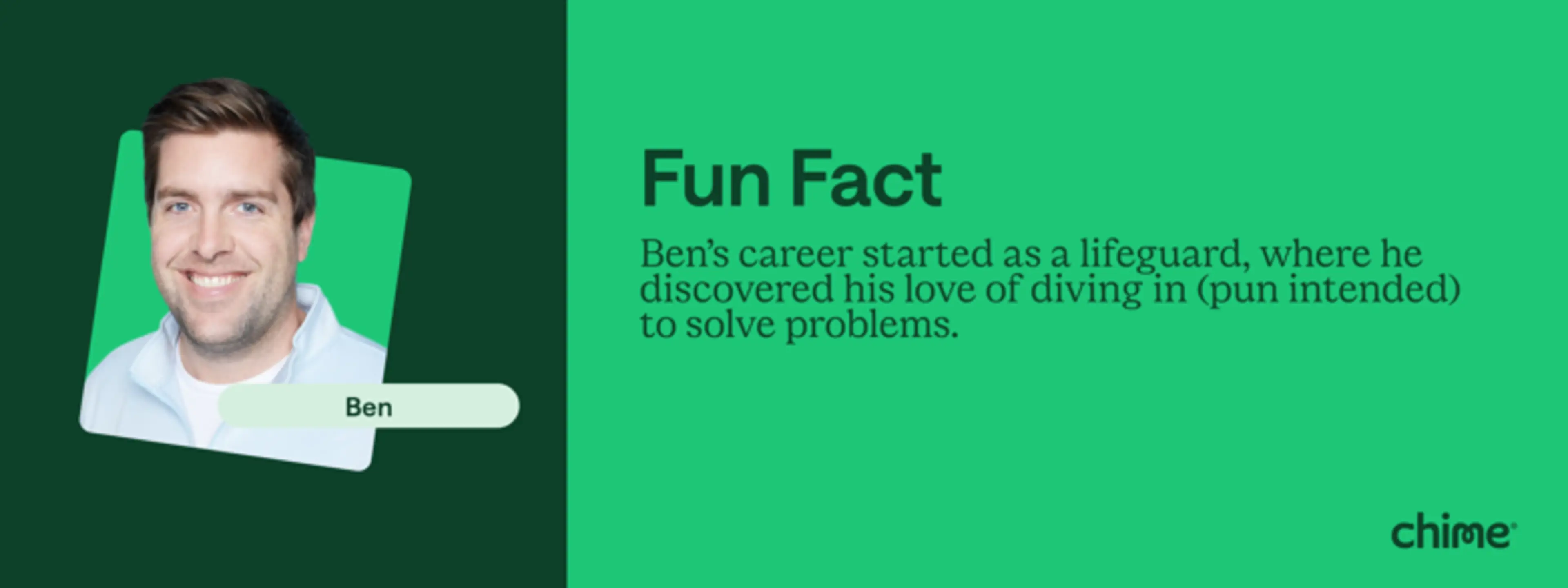
Ben

[CC] Meet Chime’s Incident Response Team - Content, Part 3, Image 1

Ben’s path to incident response started at a pool. “I was a lifeguard and wanted to do it full time,” he laughs. “It gave me that problem solving mindset—a drive to jump in when someone needs help.”

After pivoting into tech and working support at Braintree, a manager flagged his instincts for coordination and calm. He built his skills by attending conferences, connecting with other responders, and learning the hard way—on the job.

“Incidents are way more common than people think,” Ben explains. “They’re a normal part of running a business. If you’re not having incidents, you’re probably not learning.”

He’s also the first to crack a smile during high-stress moments. “Our naming system injects a bit of levity,” he says. “You’re deep in logs and alerts, and then suddenly you’re talking about ‘Flaky Platypus.’ It helps.”

Incidents are part of a healthy business. They create opportunities to learn, improve, and build resilience—together.


Shivam

[CC] Meet Chime’s Incident Response Team - Content, Part 3, Image 2

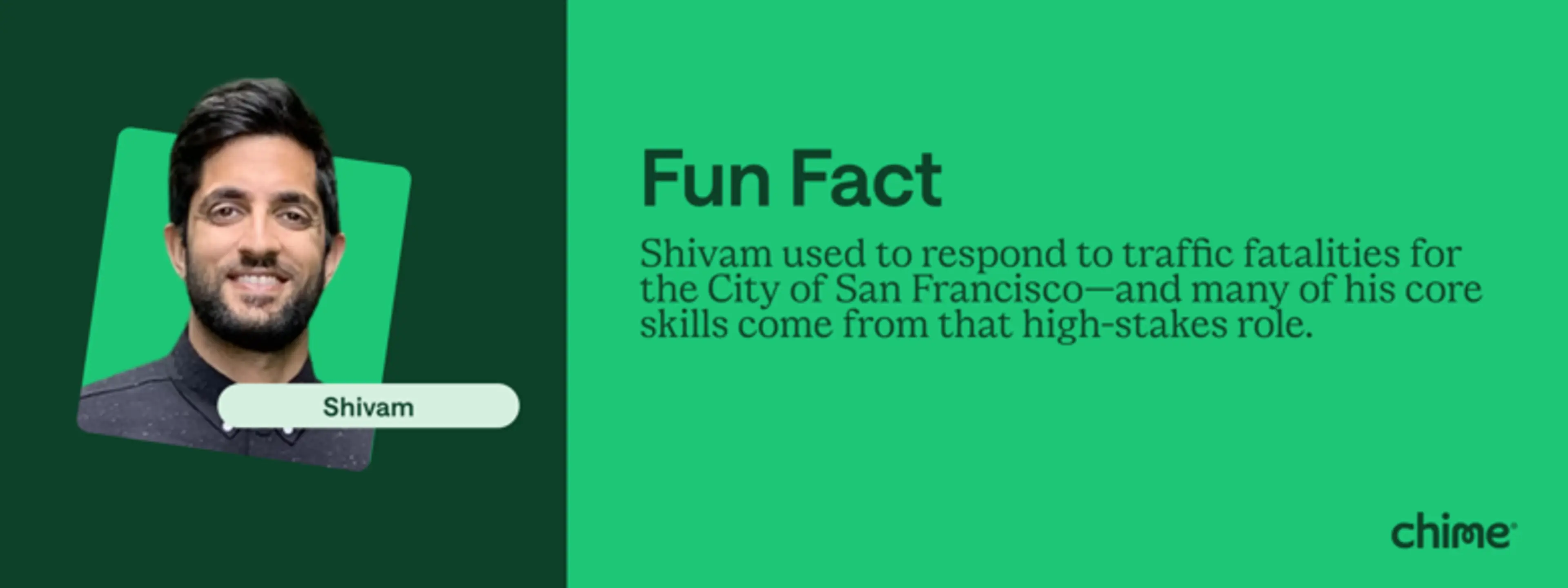
Shivam spent the first half of his career as a transportation engineer, responding to tragic accidents and designing safer streets. “It was about learning from failure,” he says, “and making systems better for the public.”

He brings that mindset—and empathy—to his role at Chime. “Our job is to keep people top of mind, not just systems,” he says. “It’s not about jargon or SLAs. It’s about what our members are experiencing in that moment.”

He’s also quick to dispel myths. “Nobody has all the answers. You don’t need to be a wizard. You just need to care, be curious, and work together.”

There’s no magical fix. Just people showing up for each other—and for our members.


Em

[CC] Meet Chime’s Incident Response Team - Content, Part 4, Image 1

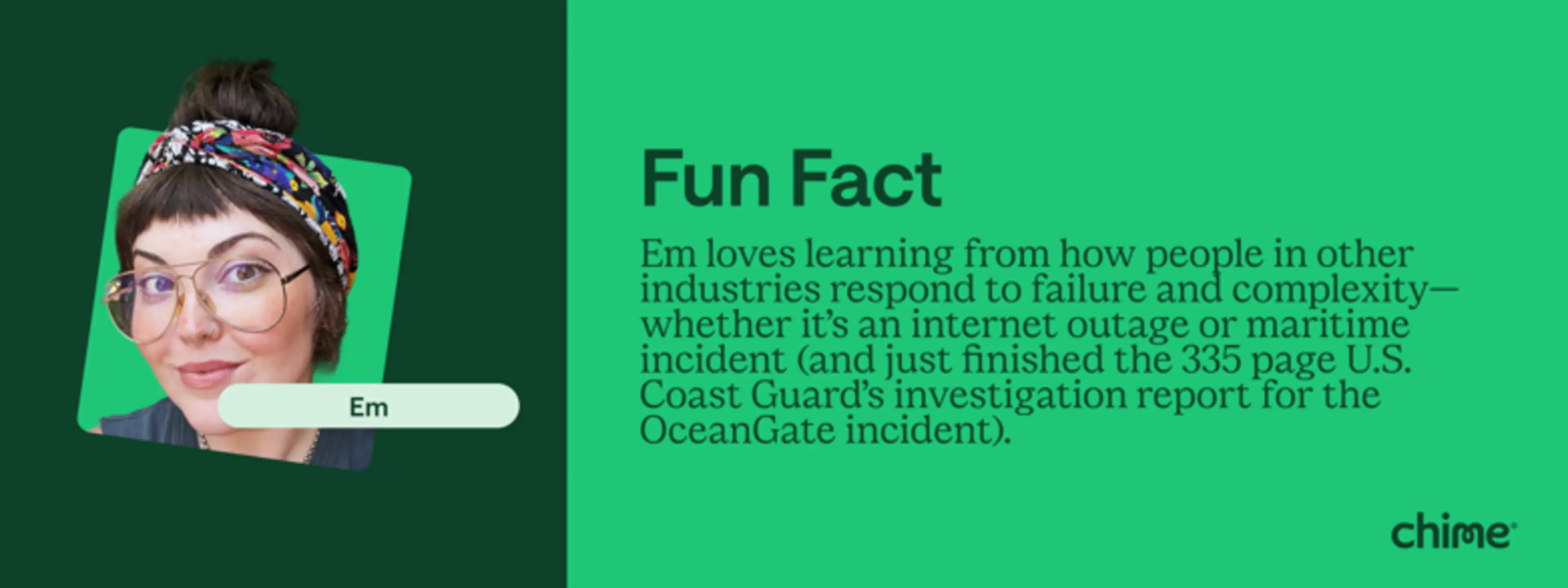
Em came up through tech support—first at the Apple Store, then at SendGrid. There, she learned quickly how to tell a real incident from a false alarm and how to stay calm while paging engineers on a weekend. “Most people think of incidents as rare,” she says. “But for us, they’re the baseline. Our role is to bring a steady, supportive presence—both technically and interpersonally—as we guide the response.”

She believes many people don’t realize how much of incident response is sociotechnical—equal parts systems and people. “It’s not just about facilitating a technical fix. It’s also about coordinating across teams and helping everyone work together under pressure,” she says. “There are two halves to resolving an incident: restoring the system, and helping our teams and our members feel whole again.”

Incidents reveal how systems really work—and with the right mindset, they can be humbling, collaborative, and even energizing.


Josh

[CC] Meet Chime’s Incident Response Team - Content, Part 4, Image 2

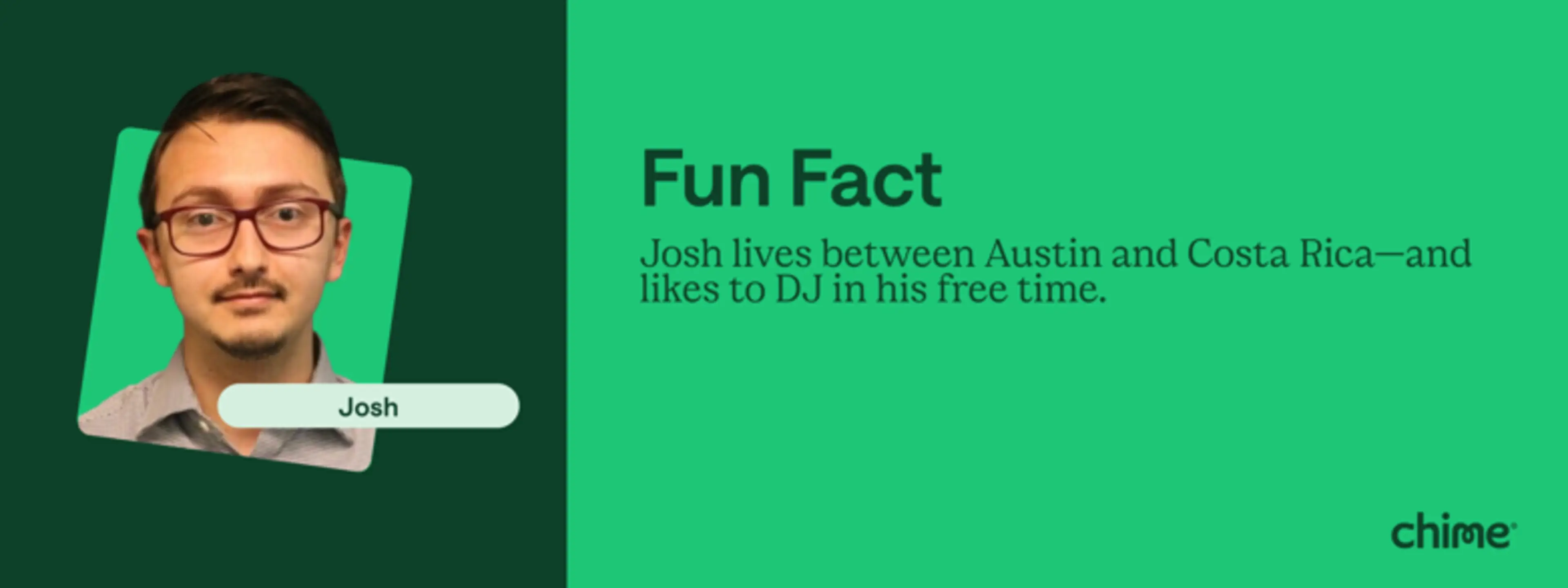
Josh’s journey started in tech support, where he first encountered incident management from the outside. After a mentor introduced him to the team behind the scenes, he dove into learning the models, systems, and human dynamics that define effective incident response—and eventually joined the team himself.

For Josh, staying calm is essential. “It’s easy to get overwhelmed in the moment, especially when impact is high,” he says. “But staying composed helps everyone think more clearly and respond more effectively.”

He emphasizes communication and teamwork as critical components. “Even before an incident occurs—and especially during one—information flow is everything,” he says. “Sharing what you’re working on—what’s known, what’s being investigated—helps create a team brain. It keeps us aligned and avoids duplication or gaps.”

What might surprise people is just how broad the scope can be. “Our team works across the entire Chime platform. We’re not deep in one service—we’re navigating how the whole system fits together. It’s a unique perspective that gives us a strong sense of how everything interconnects, and that knowledge helps us support others more effectively during incidents.”

Clear communication, calm thinking, and cross-team collaboration are what keep incidents moving forward.


Why they do it

Every team member had a different path to incident response, but they all stayed for the same reasons: the challenge, the impact, and the learning.

“I hate planning,” jokes Ben. “I want my day to be a surprise.”

“I can draw a straight line from my work to our members,” says Shivam. “That’s what keeps me going.”

“I get to see how the whole organization operates,” adds Preed. “From the newest engineer to the CTO, we work with everyone.”

And while the pager can go off at any time, they wouldn’t have it any other way.


Come back soon to learn about how the Incident Response Team names Chime’s incidents, the incident bot they developed, and how Chime’s approach to incidents has scaled over the years.